Looking for a quick, engaging, screen-free activity that you can set up in less than ten seconds? Welcome to the ultimate resource for the dots and boxes game! Whether you know it as the box and dot game, game of dots and boxes, or even the classroom classic “Pen the Pig,” this simple strategy game is an absolute must-have for your pen and paper games collection.
It is a great activity for kids, parents, and teachers alike. No matter how old you are, this game is super fun. While it looks simple on the surface, it is packed with sneakily advanced strategy, helping kids practice spatial reasoning, planning, and turn-taking.
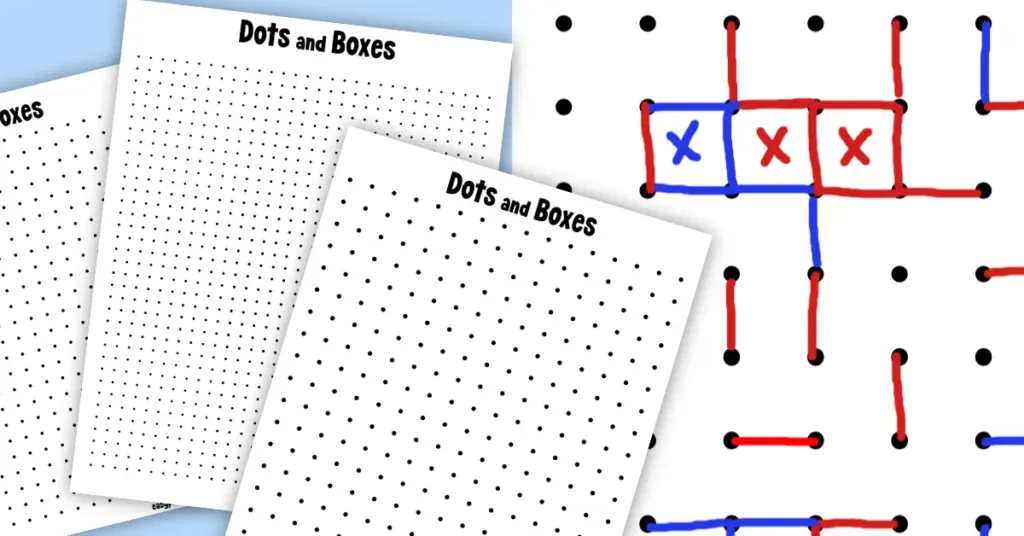
We have created easy-to-use dots and boxes printable pdf free download template pack. It features grids of various sizes so you can play quick lightning rounds or epic marathons. Grab a couple of colored pens, print your template, and let’s get boxing!
Why You Will Love Our Free Dots and Boxes Template
- Instant Screen-Free Fun: Perfect for rainy days, restaurant waits, long car rides, or morning work in the classroom. Skip drawing dots and dive straight into fun!
- Scalable Difficulty: Our dot game printable free pack comes with small grids for younger kids (who just love closing boxes) and massive grids for older strategists.
- No Apps Required: Skip the battery drain and enjoy real, face-to-face competitive fun.
How to Play Dots and Boxes: Step-by-Step Game Rules
If you have ever wondered how do you play dots and boxes perfectly without running into rules arguments, we have you covered.
Here are the clear, official dots and boxes game rules. However, if you want to change things up, we also have some variations of the game ready!
What You Need to Play:
- The Template: Our free dots and boxes game printable sheet.
- Two Players: It is traditionally a two-player game (though a third can join if you use three distinct pen colors!).
- Pens or Pencils: Using two different colored markers makes tracking much easier and visually exciting!
Step-by-Step Graphical Instructions
Step 1: Prepare the Grid
Before you start the game, you will need a grid of dots. You can use our handy printable game templates or make your own. Draw your own on regular paper or, more conveniently, on graph paper.
There are no rules on how big the grid should be; the bigger it is, the longer the game will last.

Step 2: The first player draws their line
The first player draws a single horizontal or vertical line connecting two adjacent dots. You cannot draw diagonal lines.
Tip: Choosing who goes first can be done with a fun round of rock, paper, scissors.

Step 3: Second player takes their turn
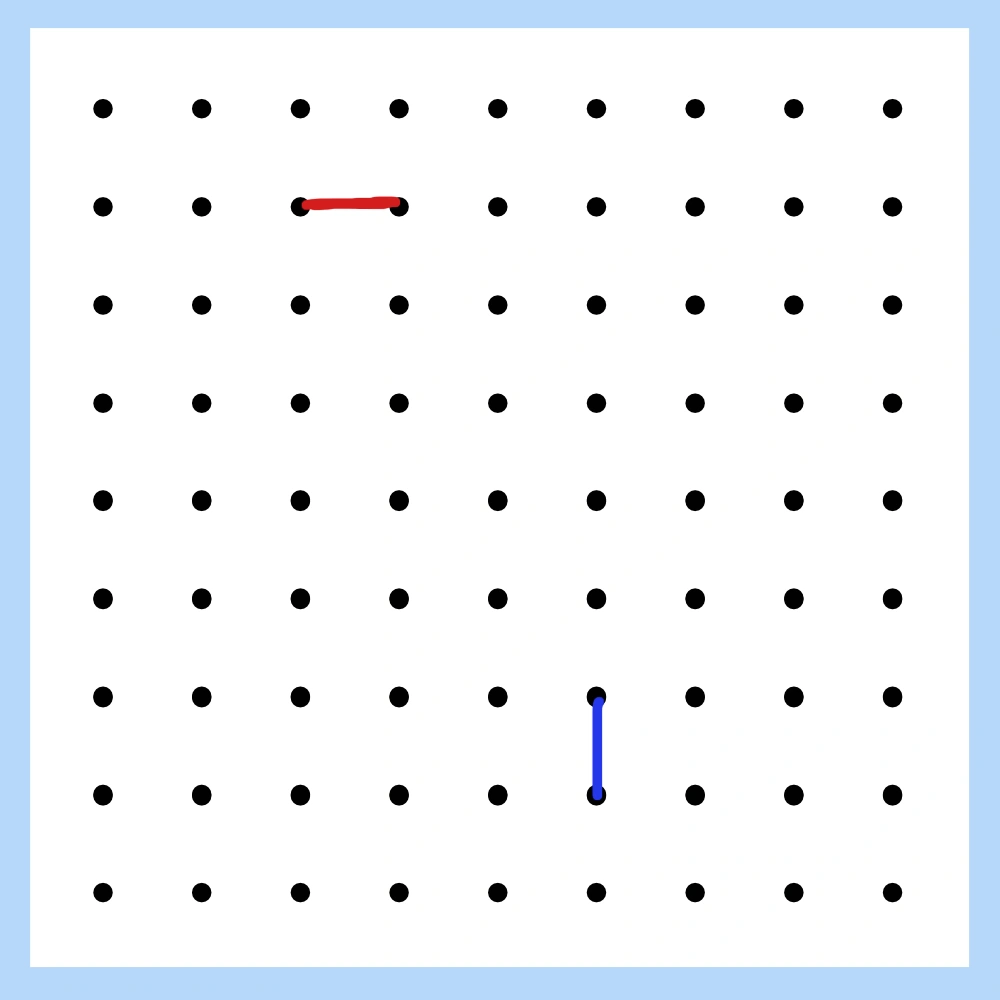
The second player now draws their line. The line can be placed anywhere on the grid, close or far from the first player’s line. It can even continue where the first player made theirs.
Step 3: Take turns drawing lines
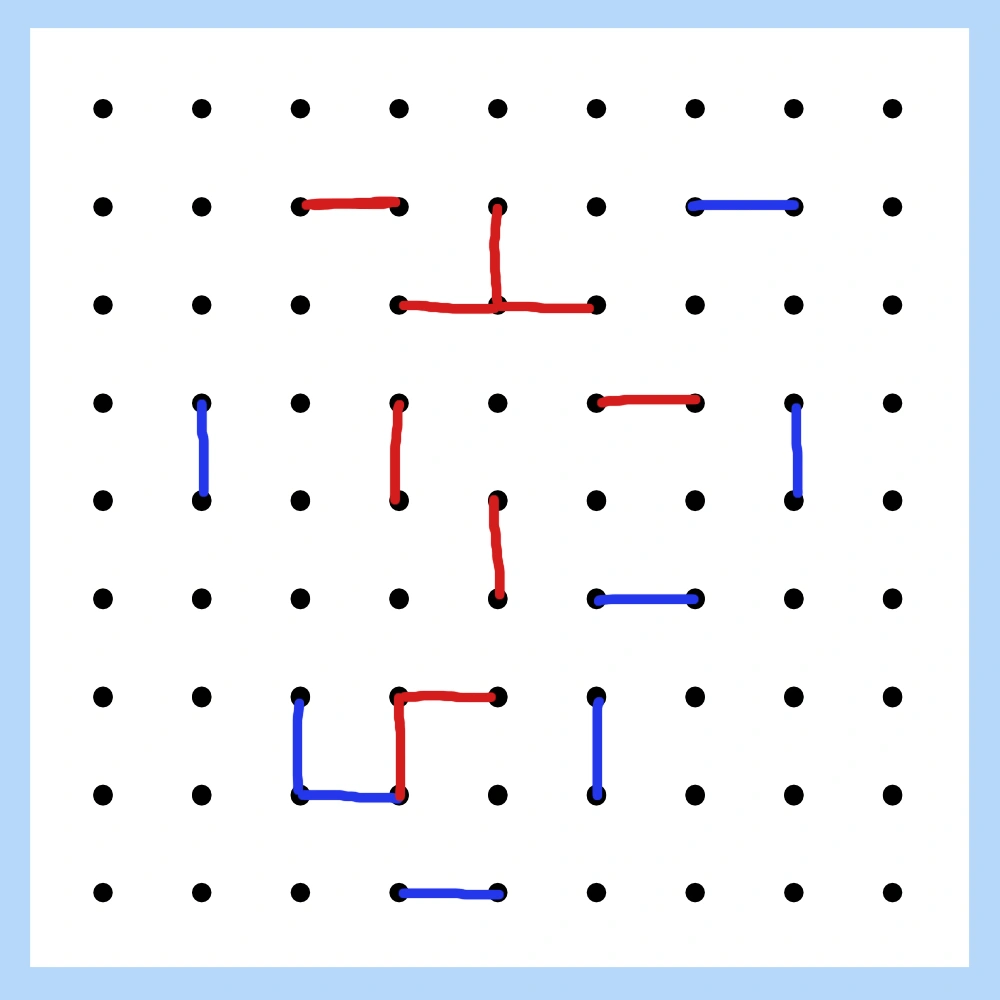
Continue taking turns and drawing lines, one per turn each, until an opportunity to make a “box” presents itself.
Step 4: Closing a Box
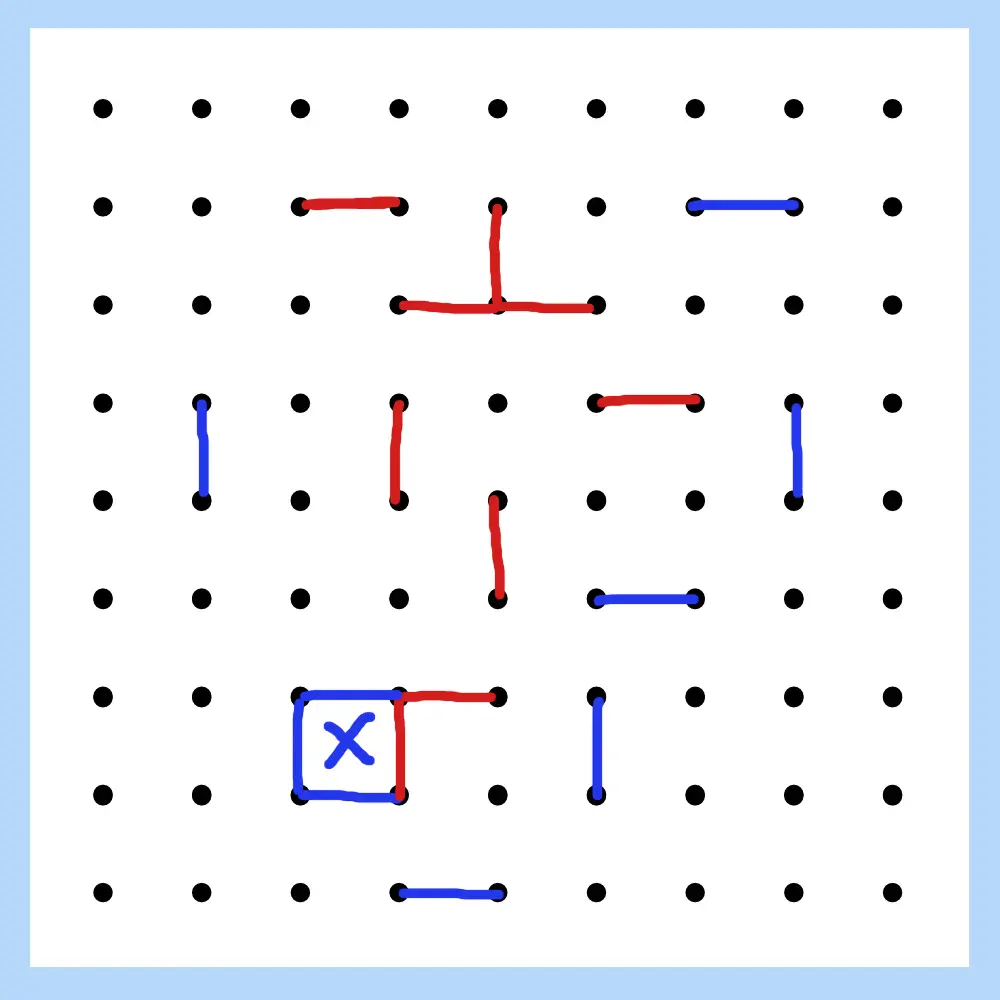
When a player has a chance to complete the fourth side of the square, completing the square makes them claim it! Once done, the player writes an X (or another symbol or initial) inside that box.
Once you claim a box, you have another turn!
Step 4: Bonus Turns
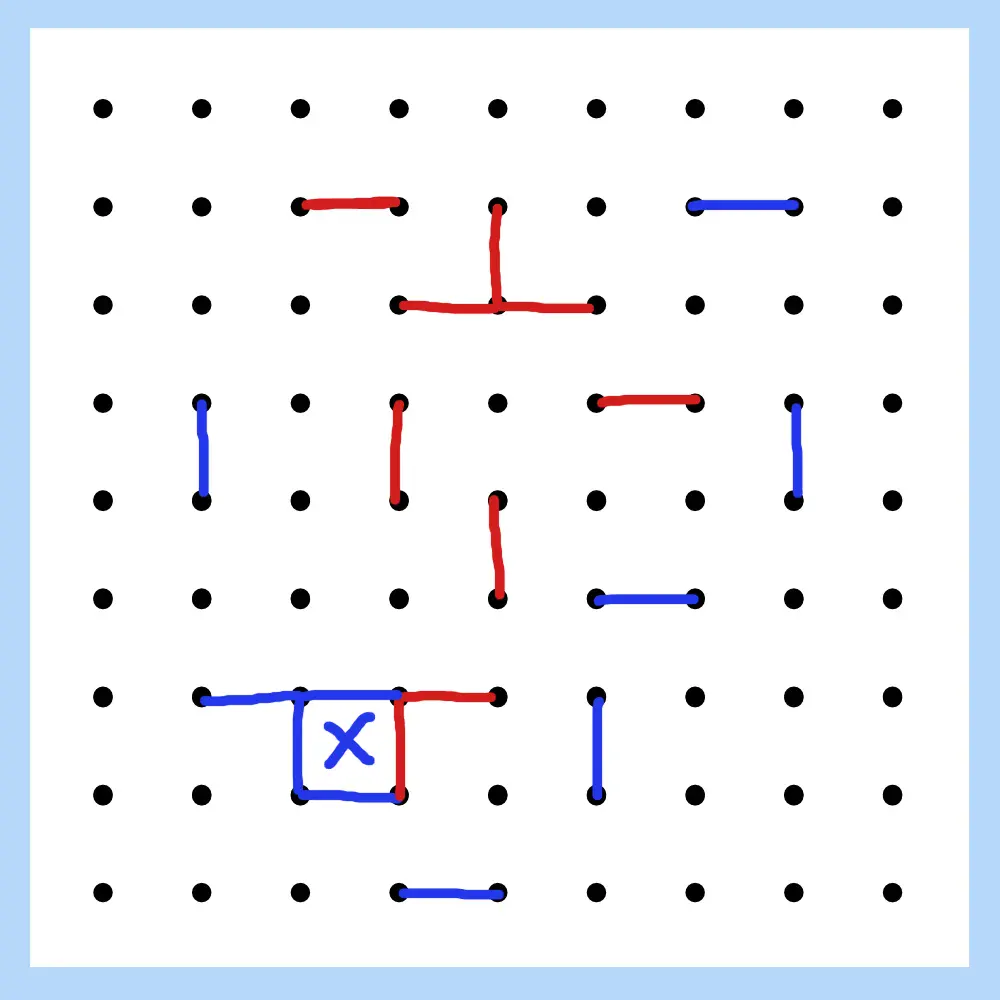
Whenever you successfully close a box, you can immediately take another turn and draw another line. But it does not stop there! If you managed to close another box in that turn, you get another bonus turn.
As long as you close a box, be it one or ten, you earn the extra turn! If you play cleverly, you can create massive chain “reactions” this way.
Step 5: Win the Game
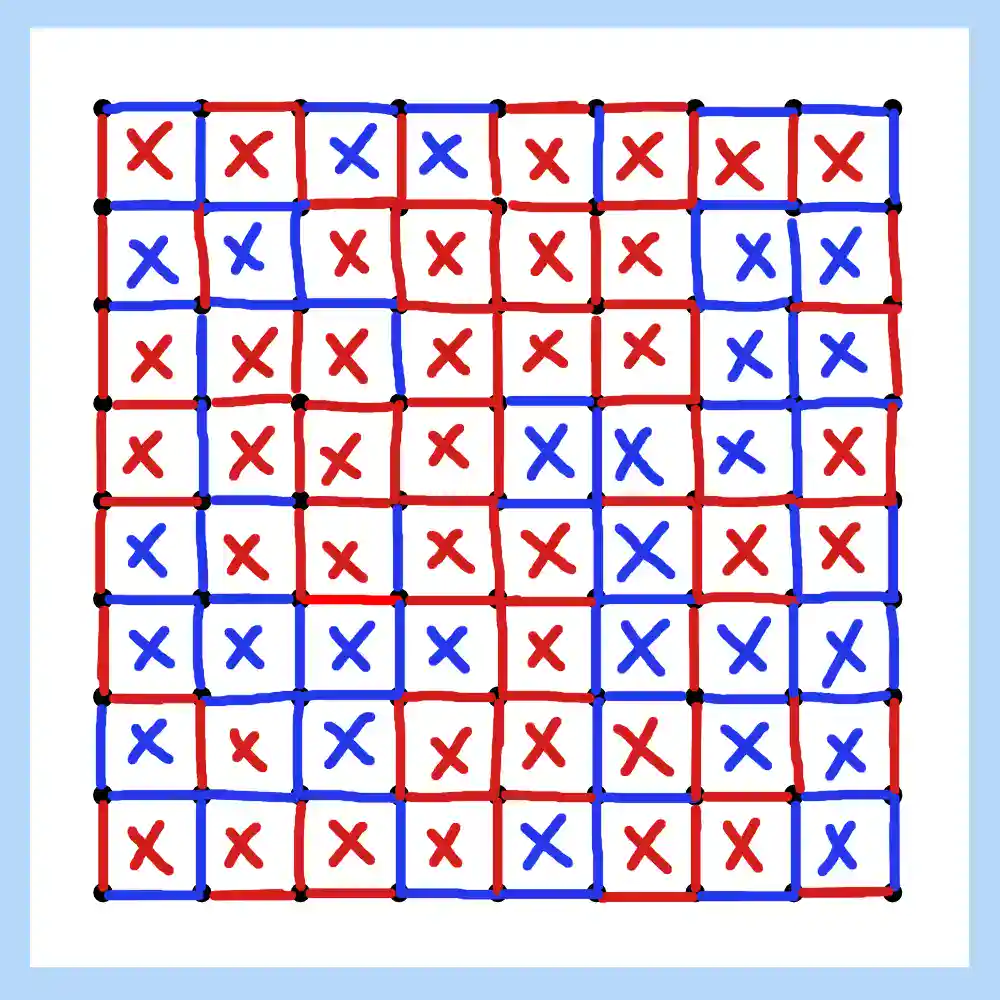
Keep on playing and taking turns until the whole grid is filled up. Once it’s filled, count the boxes each player claimed. The player who claimed the most boxes wins the game!
Advanced Strategies and Tips to Win: How to Outsmart Your Opponent
Don’t let the simple layout fool you; once you move past the basics, the box and dots game turns into a high-stakes mathematical puzzle. If you want to absolutely dominate the grid or teach your kids how to think three steps ahead, you need to master the art of chain control.
1. The Master Class: The “Double-Cross” Maneuver – The Best Easy Trick to Winning the Dots and Boxes Game
This is the ultimate competitive move in Dots and Boxes. Imagine your opponent is forced to open a long chain of 6 boxes for you. You happily start devouring the boxes one by one.
Most casual players will take all 6 boxes. Don’t do that. That is a trap! If you take the very last box, it becomes your turn again, meaning you are now forced to draw a line on a blank part of the board and open up a brand new chain for your opponent.
Instead, execute the Double-Cross:
- Claim the first 4 boxes in the chain.
- When you reach the final 2 boxes, deliberately draw a line that divides them, but do not close them. Leave them completely open.
- Your turn ends because you didn’t score.
- Now, your opponent is forced to take those 2 remaining boxes. But because they took them, it is now their turn, forcing them to open up the next big chain for you!
2. The Math of Long Chains (The Even/Odd Rule) – Advanced Tip
In an open game, players naturally try to avoid drawing that dreaded “third line” of a box. Eventually, the board fills up, and someone is forced to open up a chain (a long corridor of interconnected boxes).
When a chain is opened, the other player can usually swoop in and claim every single box in that corridor. Because of this, the entire game relies on one crucial math rule:
- In a game with an even number of long chains, the second player usually holds the advantage.
- In a game with an odd number of long chains, the first player usually holds the advantage.
Before you force open a chain, count how many separate corridors are left on the board. If the math isn’t in your favor, try to create small, isolated 2-box loops to throw off your opponent’s count!
3. Identifying “Safe” Moves (The Corner Rule)
Early in the game, you want to buy time without creating vulnerabilities. The safest lines on the entire board are the outer edges and corners. Drawing a line on the absolute perimeter of the grid only contributes to one single box, making it mathematically much harder for your opponent to sneakily turn it into a 3-sided trap. Save the interior lines for the mid-game showdown.
Fun Variations of the Game
Once you have mastered the standard dot and box games, try shaking up the rules with these fun variations:
1. “The “No-Bonus” Grid (Strict Alternating Turns)
Want to remove the massive, game-winning chain reactions and focus purely on defensive placement? In this variation, closing a box does not grant you a bonus turn. You get to initial your completed box, but your turn ends immediately, and play passes to your opponent. It makes the game much more deliberate and strategic, as you can no longer rely on a lucky streak to sweep the board.
2. Triangles and Hexagons
Instead of standard square grids, you can arrange dots into isometric triangular patterns. Instead of drawing 4 lines to close a box, players draw 3 lines to claim a triangle. It completely shifts how you calculate your moves!
3. Obstacle Course (The “Rock” Blocks)
Before the game starts, take a black marker and completely shade in 3 to 5 random squares on the grid. These are “rocks” or “dead zones.” No lines can be drawn inside these boxes, and they cannot be claimed by any player. Having random blocks in the middle of the board completely disrupts standard chain-building paths and forces players to navigate around the obstacles.
4. Treasure Hunt (Bonus Point Boxes)
Before starting, each player secretly writes down the coordinates of 3 hidden “treasures” on a separate piece of paper (e.g., Row 2, Box 4). When the game ends and all boxes are claimed, the player who captured those specific squares gets 3 bonus points per treasure. It adds an awesome layer of mystery, as you might find yourself fighting intensely over a random square without knowing why your opponent wants it so badly!
5. The “Takeover” Rule (Stealing Enemy Boxes)
If you want to turn a peaceful game of squares into an intense, high-stakes tactical war, try the Takeover rule! Normally, once a box is claimed and initialed, it belongs to that player forever. But in this version, you can actually steal your opponent’s territory.
If Player A has already claimed a box, Player B can attempt a takeover by completely surrounding that box with their own colored lines on all four sides. If Player B manages to box in Player A’s completed square from the outside, Player B scratches out the original initial, writes their own, and claims that spot as their own! It forces players to play both offense and defense, carefully guarding their borders so their hard-earned squares don’t get captured.
Frequently Asked Questions
Is this the same as the “Pen Game” or “Game of Pigs”?
Yes! The rules of the game pigs and the rules of the pen game are regional and colloquial names for the exact same classic dot matrix game.
Can more than two people play?
Yes, absolutely! While it is traditionally a head-to-head two-player game, three or even four players can easily join the fun. The only trick is ensuring that every single player has a completely different colored pen or marker. This makes it super easy to see who claimed which box when you tally up the scores at the end of the game.
How many lines can I draw on a single turn?
In a standard game, it’s one per turn, unless you claim a box. If you claim a box, you get another turn. You can, however, set a one-per-turn-only rule.
Ready to claim the entire board? Scroll down to click our link, grab your dots and boxes template, print out a stack, and let the ultimate strategy showdown begin!
You may also like: printable battleships game sheets
Want instant access to all of our printable crafts, activities, and resources?

With thousands of crafts, activities, worksheets, coloring pages, and drawing tutorials to print, you will always have just the resource you need at your disposal. Perfect for parents and teachers alike!